
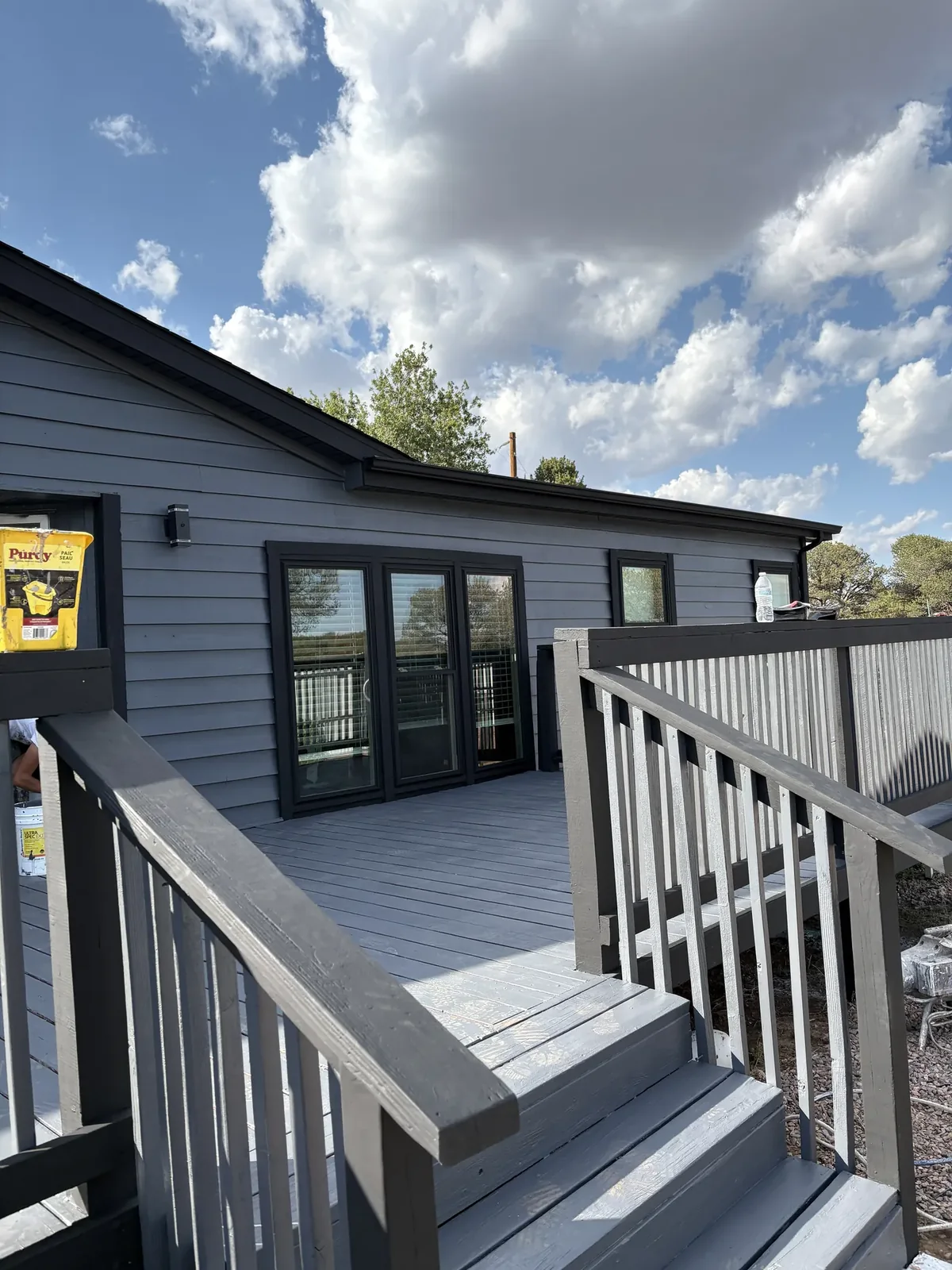
A gray, splintered deck can look like a tear-down and turn out to be a weekend of prep away from beautiful, or it can look fine on top while the frame underneath is quietly failing. The difference isn't the color of the boards. It's the structure. Before you decide to restore or replace, the honest question is: are the bones sound, or aren't they?
Surface wear vs. structural failure
Almost everything you see from a lawn chair is surface wear: faded stain, raised grain, splinters, a few cupped or cracked boards, black mildew in the shady corners. None of that condemns a deck. Wood that has gone gray on top is usually still perfectly strong underneath. The weathering is skin-deep, and a full strip-and-stain brings it back.
Structural failure is a different animal, and it lives in the parts you don't look at: the framing, the connections, and the fasteners. A deck can have flawless boards sitting on a frame that's ready to let go, which is why an honest restore-or-replace call starts underneath the deck, not on top of it.
How we assess the bones
When we look at a deck, we work through the load path from the house outward:
- Ledger board. This is where the deck attaches to the house, and it's the single most important connection. We check for rot behind it, proper flashing, and real structural fasteners, not just nails. A failing ledger is the leading cause of deck collapses, so it gets the hardest look.
- Joists and beams. We probe the framing for soft, punky spots, especially where joists sit on the beam and anywhere water collects. A screwdriver that sinks into the wood tells the story fast.
- Posts and footings. Posts that meet the ground or sit in trapped moisture rot from the base up. We check that footings are solid and posts aren't crushing, leaning, or spongy at the bottom.
- Fasteners and connectors. Rusted, backed-out, or missing screws and joist hangers turn a solid frame into a wobbly one, often the cheapest thing to fix and the most important.
If the framing is sound and only the walking surface is tired, you're firmly in restoration territory, and that's the good news for most decks we see.
When restoration is the smart money
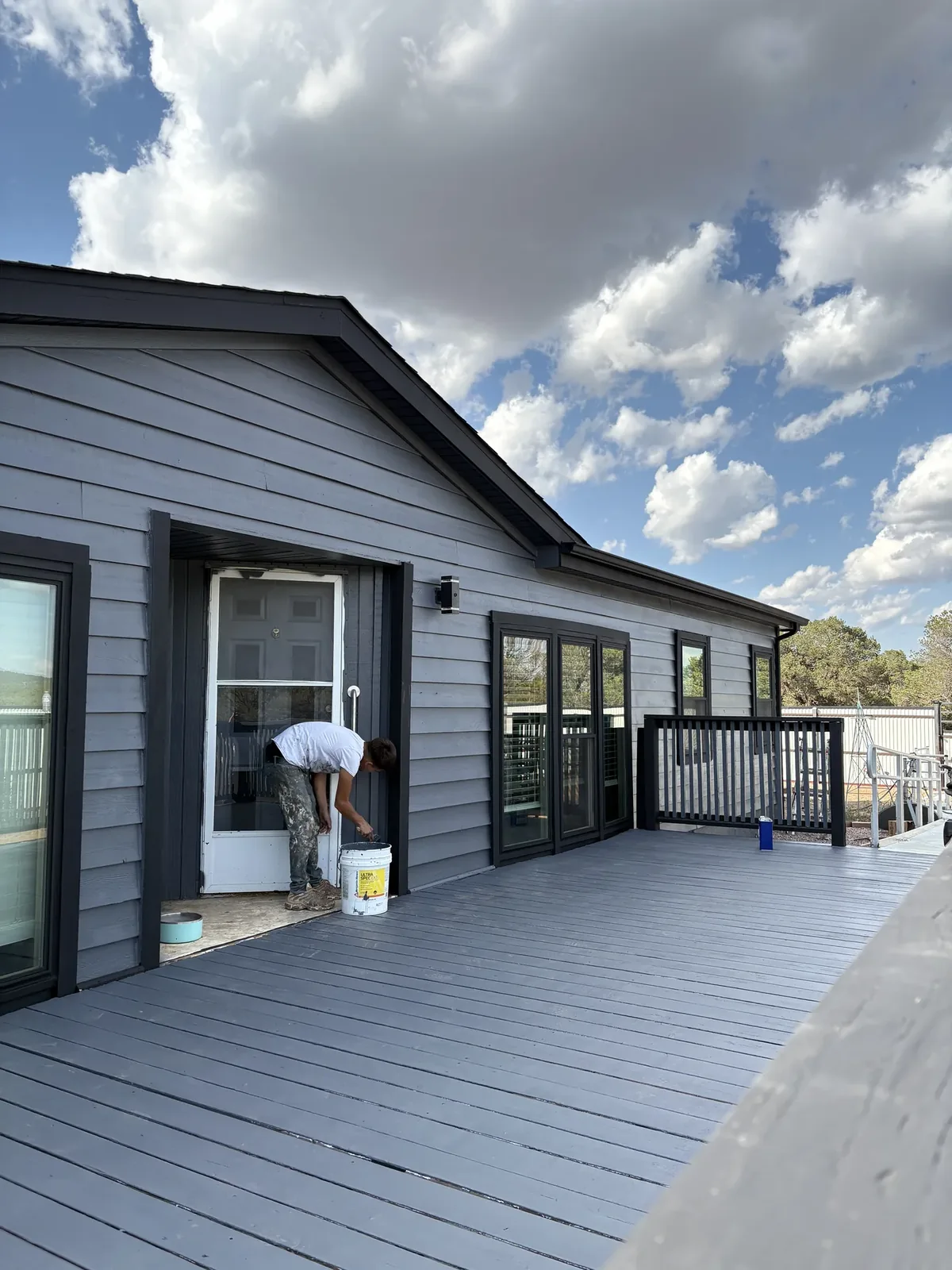
Restoration wins when the structure is healthy and the problems are cosmetic or isolated. A full deck restoration (power wash, strip the old finish, sand, brighten, then stain and seal) takes gray, splintered boards back to like-new for a fraction of a rebuild. Swapping out a handful of cracked or cupped boards is routine and folds right into that same job. If nine boards out of ten are solid and the frame checks out, replacing the whole thing is spending money you don't need to spend.
Restoration also resets your maintenance clock. Once the deck is properly stripped and re-stained, you're back to a simple re-coat every couple of years instead of chasing a finish that never bonded in the first place. If your deck's finish is failing but the wood is fine, the real question may be restoration versus a quick re-coat. We break that down in deck restoration vs. a quick re-coat.
When a deck is truly past saving
Some decks have earned their replacement. Replacement makes sense when the failure is in the structure and it's widespread, not isolated:
- The ledger is rotted or was never flashed and fastened correctly, and moisture has gotten into the house's rim.
- Multiple joists, a beam, or several posts are soft, cracked, or rotted. Once the framing is compromised in more than one spot, patching stops being economical.
- Footings have heaved or sunk enough that the deck is out of level and pulling on its connections.
- The deck was poorly built to begin with, so bringing it up to a safe standard costs about what a new one would.
When you're replacing that much framing, the cost of a new, properly built deck often lands close to the repair bill, and you get a fresh structure instead of a patched one.
Safety red flags to take seriously
A few warning signs mean stop using the deck until it's looked at, regardless of how the boards look. Any wobble or sway when you walk on it. Railings or guardrails that move when you lean on them. Rot or staining on the wall where the ledger attaches. Rusted, bent, or missing joist hangers and post connectors. These aren't cosmetic. They're the difference between a deck that holds and one that doesn't.
Cost and longevity, honestly
A restoration costs a fraction of a replacement and, on a structurally sound deck, buys years of good service, with a light maintenance coat every two to three years keeping it there. A replacement costs more up front but is the right call when the frame is gone, because no finish makes a failing structure safe. The trap is spending restoration money on a deck that needs replacing, or replacing one that only needed a good refinish. A real assessment lands you on the right side of that line.
Related services
Most deck work overlaps with the rest of what we do: deck restoration for the full strip-and-stain, plus staining and sealing for railings, stairs, and fences. If your deck's boards are sound and you're only weighing finish options, start with restoration vs. a quick re-coat.
Not sure which side of the line your deck is on? Request a free estimate and we'll get under the deck, check the structure honestly, and tell you what it actually needs: restore or replace.