
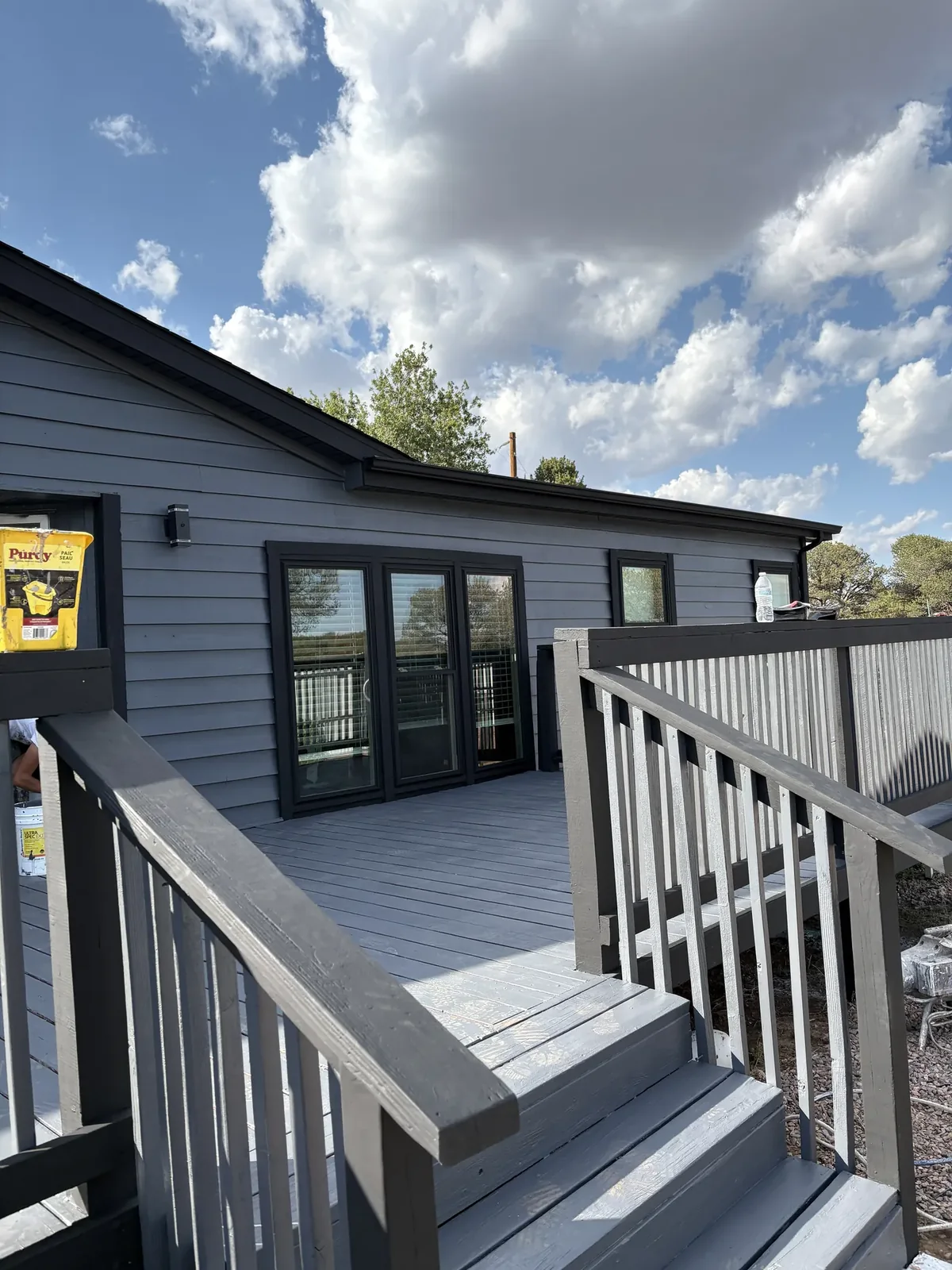
Every spring, the same temptation shows up on decks all over Huerfano County: the finish looks tired, so the plan becomes a quick coat of stain to freshen it up before summer. It feels efficient. It almost never lasts. Within a season or two that fresh coat is peeling in sheets, and the deck looks worse than before you started. Understanding why is the difference between spending money once and spending it every year.
Why a quick re-coat fails fast
Deck stain has to bond to the wood, not to the old, failing finish sitting on top of it. When you brush new stain over a weathered deck, a few things work against you at once. The gray surface fibers are dead and loose, so anything you put on them lifts when they do. Trapped mildew and dirt keep the new coat from grabbing. And the old finish is often still shedding, taking your new coat with it as it goes.
The worst offender is putting a fresh coat over a peeling film finish. You are laying good stain on a foundation that is already letting go. On a horizontal surface that collects sun, rain, and foot traffic, that shortcut simply does not have a chance.
What a full restoration involves
A real deck restoration takes the boards back to sound, receptive wood before a drop of new stain goes on. The steps build on each other:
- Power wash. Strip off dirt, mildew, and loose surface grime so you can see what you are actually working with.
- Strip the old finish. Chemically remove failed stain and film so the new coat bonds to wood, not to a failing layer.
- Sand. Knock down raised grain and splinters for a smooth surface that takes stain evenly.
- Brighten and neutralize. A wood brightener evens out the tone and neutralizes any stripper residue, so the new stain lands uniform and rich.
- Stain and seal. Apply the stain system and a protective sealer built to shed water and block UV.
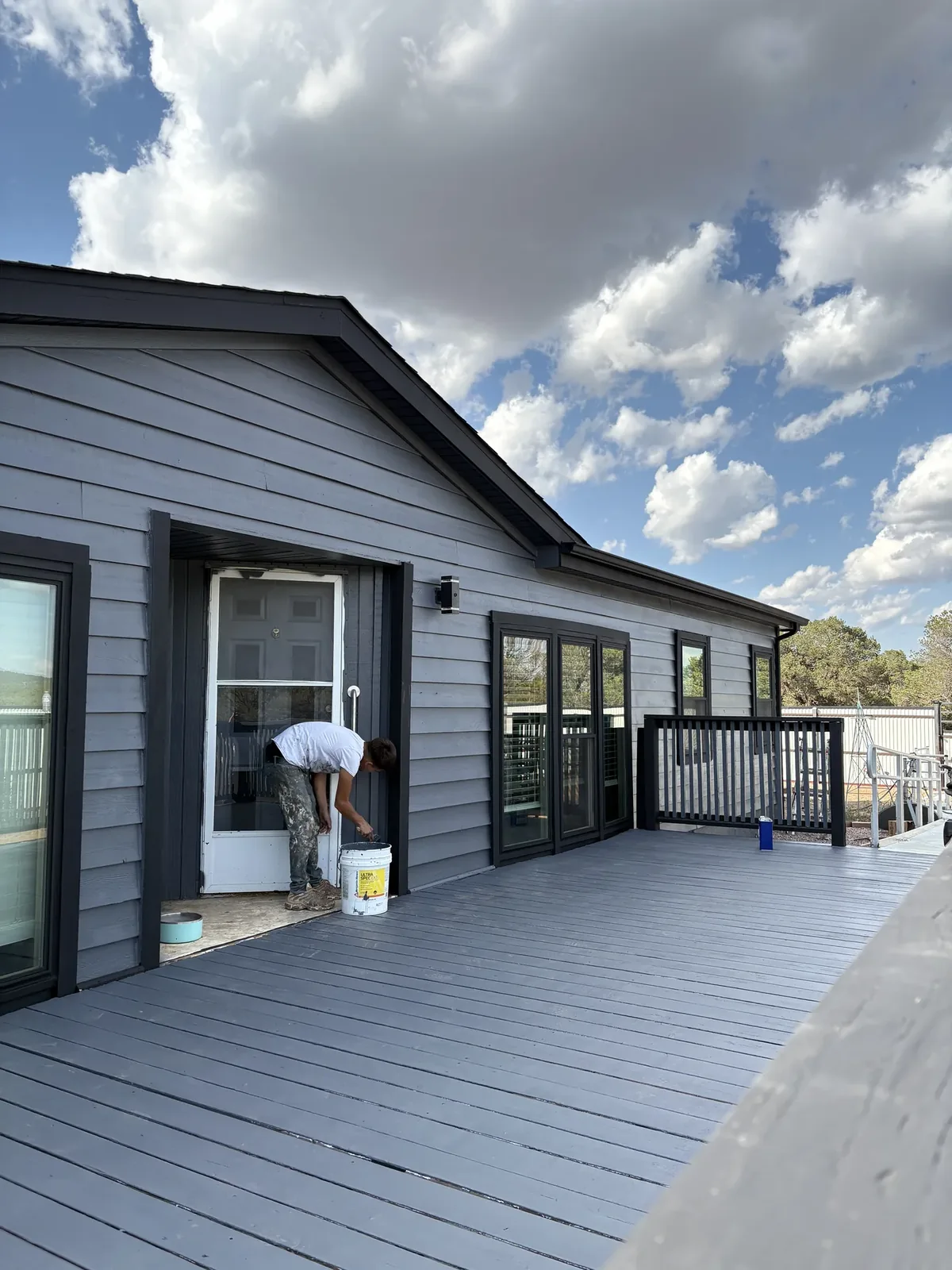
This is the sequence behind the decks our customers talk about most: gray, splintered boards that come back looking brand new after a full strip-and-stain. There is a full walkthrough on our deck restoration page.
Transparent, semi-transparent, or solid?
The stain you choose is a trade between showing the wood and protecting it:
- Transparent shows the most grain and natural color but offers the least UV protection, so it needs re-coating most often.
- Semi-transparent is the sweet spot for most decks here: enough pigment to guard against our intense high-altitude sun while still letting the grain show.
- Solid covers the grain like paint and lasts longest on foot traffic, but once it is on, going back to a natural look means stripping again.
Check the bones first
Before any finish decision, the structure gets a look. We check for soft or rotted boards, popped or rusted fasteners, and railings that have loosened up. There is no sense putting a premium finish over a board that needs replacing, and a protruding screw head will tear up bare feet no matter how good the stain looks. Catching these during prep is far cheaper than after.
Best season and maintenance cadence
Late spring through early fall is the window: you want dry boards and daytime temperatures in the stain manufacturer's range, with no rain in the forecast for a couple of days after. Our dry summers are ideal for it. Once a deck is properly restored, plan on a maintenance coat every two to three years depending on exposure and traffic; the sun-baked, west-facing boards will always need attention first. Staying on that cadence means you are re-coating clean, sound wood instead of restoring from scratch again.
Cost versus longevity
A quick re-coat is cheaper on the day and more expensive over five years, because you end up doing it again and again while the underlying wood keeps degrading. A full restoration costs more up front but resets the clock: it protects the boards themselves, holds its look for years, and drops you into that simple maintenance-coat rhythm. For a structure you paid to build and want to keep, the math favors doing it right the first time. It is the same logic behind a proper log home restoration. Prep is what makes the finish last.
Not sure whether your deck needs a full restoration or is still in maintenance-coat territory? Request a free estimate and we will take an honest look and tell you what it actually needs.