
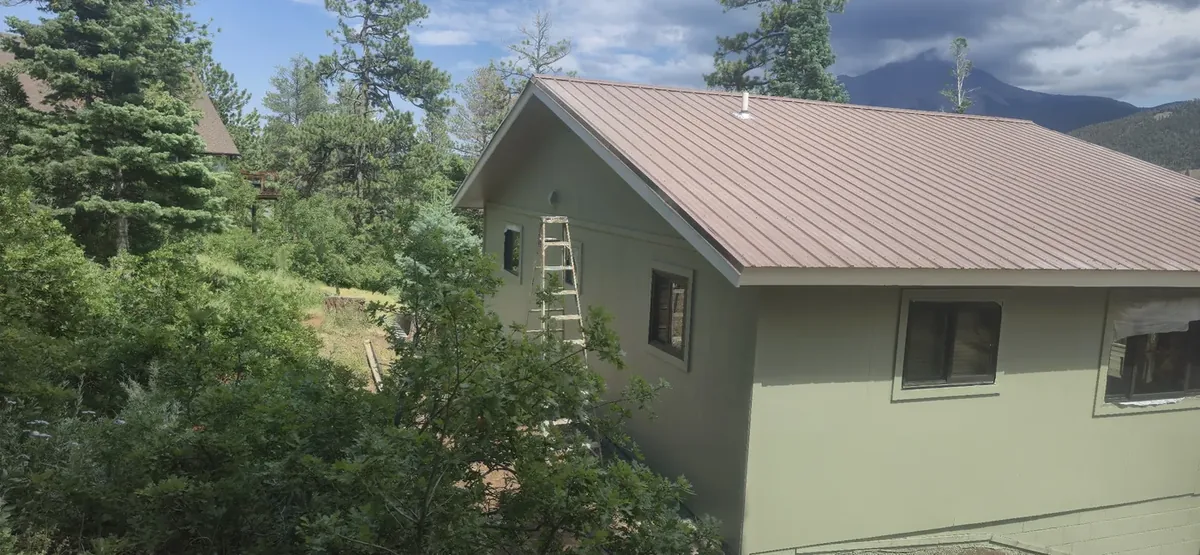
You can buy the best exterior paint made and still watch it fail early if you put it on at the wrong time of year. Exterior coatings don't just dry: they cure, forming a bond with the surface, and that chemistry needs the right temperature and humidity to do its job. Up here at six thousand feet and higher, the weather that lets paint cure well shows up in a fairly narrow window. Timing the work to that window is one of the biggest things you can do to make a paint job last.
Why temperature makes or breaks the bond
Most exterior paints want to go on when both the air and the surface sit roughly between 50 and 85 degrees, and they need to stay in that range while the coating cures, often overnight, not just during the hour you're brushing. Too cold and the paint can't coalesce properly, leaving a weak film that cracks and peels. Too hot and it skins over before the layer beneath has set, trapping problems under a dry-looking surface.
The surface temperature matters as much as the air. A wall that's been baking in direct high-altitude sun can run far hotter than the thermometer reads, which is why we chase the shade around a house instead of following the sun. Paint flashing off too fast on a sun-baked wall is a recipe for lap marks and poor adhesion.
The late-spring-to-early-fall sweet spot
For homes around Walsenburg and Huerfano County, the reliable exterior window runs from late spring through early fall. By late May the overnight lows have usually stopped dipping into paint-killing territory, and that stays true into September and often October before the first hard freezes return. Our dry summer air is a real advantage. Low humidity helps coatings cure clean and predictably, which isn't something every climate offers.
The edges of that window are where judgment comes in. Early spring and late fall can serve up a beautiful 60-degree afternoon attached to a 28-degree night, and that overnight low is what governs whether the fresh coat sets up or slumps. We watch the forecast lows, not just the daytime highs, before committing a wall to paint.
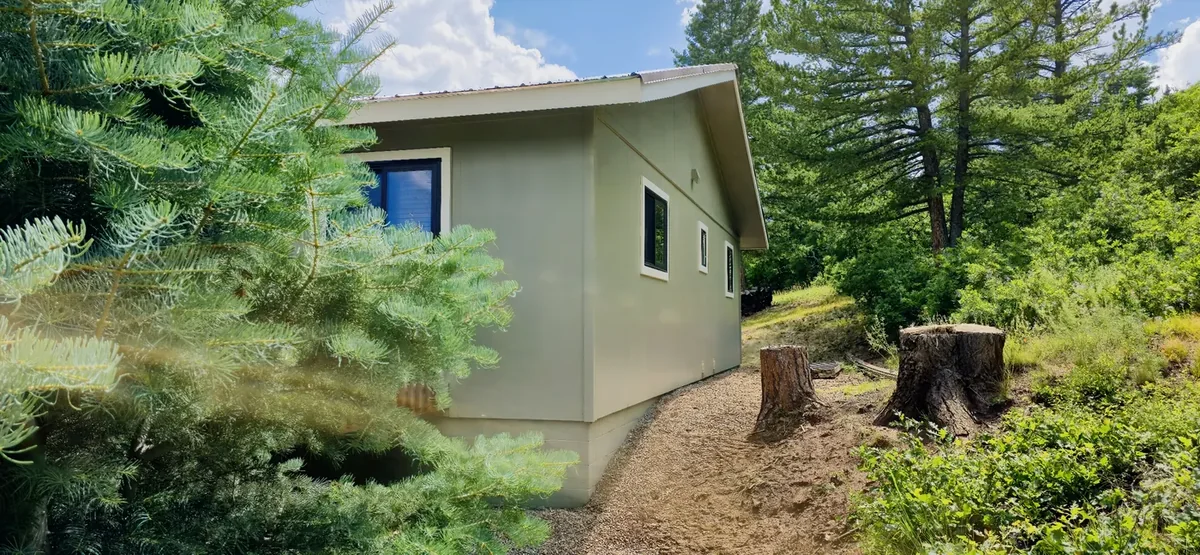
Watching the dew point and overnight lows
Humidity has a quieter influence than temperature, but it's just as real. If a fresh coat is still curing when the air cools toward the dew point overnight, moisture can condense on the surface and leave a dull, blotchy, or streaky finish: surfactant leaching, in the trade. That's why we like to have coats on with enough daylight and warmth left for them to set before evening. On a crisp Colorado evening the temperature can drop fast after sundown, so finishing with margin to spare isn't fussiness, it's how you avoid a callback.
Working around afternoon sun and monsoon storms
Two mid-summer patterns shape the workday here. The first is direct sun: rather than paint a wall while it's blazing, we start on the shaded sides and move around the house so the surface stays in a workable range. The second is the summer monsoon. From roughly July into August, clear mornings often build into afternoon thunderstorms, and rain on a coat that hasn't set can ruin it. The practical answer is to get exterior coats on in the morning and early afternoon and keep an eye on the sky. It's not a reason to avoid summer. It's a reason to plan the day around the weather instead of against it.
Why booking early matters
Because the good exterior window is only a handful of months long, it fills up. Everyone in the county wants their house painted in the same stretch of warm, dry weather, so the calendar tightens quickly once spring arrives. Reaching out early (even before you're sure of your exact colors) gets you on the schedule while the best-weather weeks are still open, and it leaves room to reschedule around a rainy stretch without pushing your whole project into the cold. If you're weighing exactly what goes on the walls, our guide to choosing exterior paint for Colorado's climate pairs naturally with getting the timing right.
How winter keeps the work going
When exterior season closes, the work moves indoors, which is exactly why we run year-round. The cold months are for interior painting, drywall, tile, and cabinet refinishing, all in a climate-controlled space where temperature and humidity are never the problem. That's a good thing to know if your exterior lands on next spring's schedule: the winter is a fine time to knock out the inside of the house so the whole place is fresh by the time the outside season opens again. Our full range of interior and exterior services covers both halves of that calendar, and the trade-offs between the two are worth understanding, something we get into in interior vs. exterior paint.
Related services
Exterior timing is really about protecting the whole envelope of the house, and it ties into the rest of what we do: exterior painting for siding, stucco, trim, and soffits, plus staining and sealing for decks and fences that live under the same sun. Get the season right and the finish rewards you for years.
Thinking about an exterior repaint for this year? Request a free estimate and we'll help you land the job in the right weather window, and keep your project moving whatever the season.